The Blueprint for Scaling VR Nursing Simulation: Lessons From Maria College

Table of Contents
Name of the heading 1
What separates a VR program that scales from one that stalls? For Maria College, the answer is structure, ownership, and a long-term vision that connects technology to curriculum from day one. This is the story of how one college in Albany, New York, built one of the nation's largest VR resources dedicated to healthcare education, and what nursing programs everywhere can learn from it.
This initiative with Dr. Jason Coley, Director of the Center for Academic Innovation, and Jacqueline Mahoney, Grants Manager, was led in partnership with Maria College, Albany, New York.

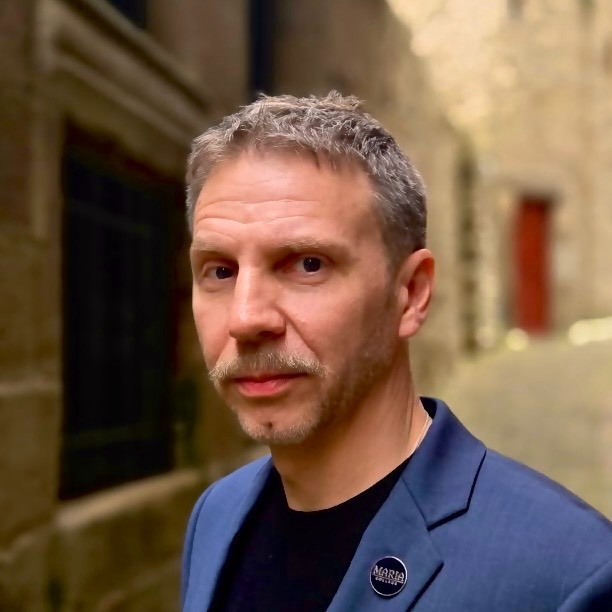

"It makes economic sense to invest in VR because it increases capacity without simply buying more manikins. What we need is more bandwidth in the educational pathway. UbiSim lets us teach more students at once, reduces the faculty required for each session, and frees educators to spend more time on remediation and individualized support. It's not replacing faculty, it's increasing their capacity."
1- Start your table with the syntax {start-table}
2 - Add an H3 Heading to create a new column (this will be the column title)
3 - List cells as bullet points in a List element
4 - End your table with the syntax {end-table}
Key Takeaways
- VR works when it's infrastructure. Maria's success comes from embedding UbiSim as a required, structured step in the simulation continuum.
- Scale requires a dedicated owner. The Center for Academic Innovation is the coordinating body that makes everything work, driving integration across programs, semesters, and logistics, reaching 150+ headsets and 1,289 lab engagements.
- Outcomes data fuels the next investment. Rigorous measurement attracted 28+ media features and opened doors to new grant funding, turning one $770,000 grant into a multi-grant, nationally recognized program.
The Challenge: A Nursing Pipeline Stretched to Its Limits
Maria College faced a familiar but urgent problem: clinical placement shortages, limited faculty bandwidth, and growing student cohorts required new approaches to ensure students had consistent, high-quality hands-on preparation before working with real patients.
Rather than add more manikins or compete for already-scarce clinical placements, Maria College made a different bet: build a fully integrated, scalable VR simulation program at the center of their nursing education pathway. Three years later, that program has grown into what is now one of the largest known VR resource in the nation dedicated to healthcare learning and training, and the outcomes data is starting to tell the story.
The Foundation: Federal Funding and a Clear Vision
In 2022, Maria College was awarded a $770,000 federal community project grant, championed by Congressman Paul Tonko, to launch what would become the Center for Academic Innovation. The grant funded hardware, software, infrastructure, and a vision that set Maria College apart from the start.
"My greatest fear when I first started this project was that I would get all this cool technology, but that it would be almost like a side quest," Coley said. "That's a model a lot of other institutions have used with VR. Just okay, here are four headsets, stay busy. We didn't do that."
From day one, Coley designed the program to be integrated, modular, and built to scale. The original grant funded 40 headsets. Today, the fleet has grown to over 150, supplemented by additional federal and local grants, and the program has expanded across nursing, occupational therapy, counseling, and student support services.
In its first two years of operation, the VR Hub reached 73.3% of all Maria College students, exceeding its Year 2 target by nearly 25%. In real numbers: 1,109 nursing students were onboarded to the VR lab between June 2024 and May 2025 alone. When you count all instances across both years, the lab has logged 819 engagements in Year 1 and 1,289 in Year 2.
The Model: VR as the Bridge in a Simulation Continuum
What makes Maria College's approach distinctive isn't just the scale. It's the intentionality of where VR sits in the educational pathway. Students don't just use VR occasionally. It's a required, structured step in a carefully sequenced learning progression.
Students begin with classroom instruction, then move to a skills lab where they practice on low-fidelity manikins, IVs, catheters, and basic psychomotor skills. From there, they enter the high-fidelity simulation lab, working with computerized manikins that breathe, respond, and deteriorate. Only after completing this simulation pathway do students enter clinical placements and work with their first human patients.
UbiSim sits inside that pathway, inserted as an additional lab layer before clinical placements. The effect is significant.
"We've created wider bandwidth in the pipeline," Coley explained. "We can take half or two-thirds of a class to the VR lab, and a smaller cohort goes to the manikins. A manikin can only have so many people around it at a time. They were coming up with 12 students at a time. Now we do eight, but with a higher quality experience."
There's a secondary benefit that Coley didn't fully anticipate at the outset: freed-up faculty time. Because UbiSim doesn't require constant faculty supervision, instructors gain bandwidth for one-on-one remediation with students who need extra support. Interview data from the program evaluation confirms the impact: faculty who join students in the VR lab, particularly in smaller evening cohorts, produce noticeably stronger student experiences and learning outcomes.
The program is also designed for access beyond campus walls. Through a VR headset loaner program, 30 headsets were loaned out just this semester, enabling students to run UbiSim from home using their Maria College credentials. This has been especially valuable for weekend cohorts, who can meet during the week and practice before setting foot on campus.
The Result: Scaling Without Sacrificing Quality
Coley runs full-day onboarding sessions at the start of each semester, investing heavily in making the first VR experience frictionless and positive. Headsets are outfitted with aftermarket comfort straps to accommodate different head shapes, hairstyles, and headwear. Casting technology lets instructors see in real time what students are viewing inside the headset, so discomfort or confusion can be diagnosed and resolved on the spot.
"There's no impression like a first impression," Coley said. "You have to make that introduction as favorable and impressionable as possible."
The results speak for themselves: 44.8% of students in Year 2 came in with no prior VR experience, and yet only 17.3% reported feeling uncomfortable after their lab sessions. This semester, Maria College is serving one of its largest nursing cohorts in recent memory, and students are proactively checking out headsets weeks before their labs are even scheduled.
What 2 Years of Data Reveals: Engaged, Prepared, and Confident
Maria College takes a rigorous, mixed-method approach to program evaluation, now backed by a formally approved IRB study. The results from Year 2 are striking.
{start-table}
Outcome Area
- Clinical Readiness
- Academic Performance
- Class Size Growth
- Engagement
- Belonging
- Empathy & Communication
Metric
- Students reporting better preparation for clinical work
- Mean grade in NURS 260, Spring 2023 vs Spring 2025
- Average class size pre-pandemic vs post-pandemic
- Nursing students reporting feeling engaged in their studies
- Students reporting a stronger sense of belonging in their program
- Students rating themselves "very good" or "good" at patient care
Result
- 65.3%
- 82.6 -> 95.8
- 119.5 -> 130
- 93.5%
- 65.3%
- 85%
{end-table}
It's still too early for longitudinal NCLEX data. Those studies take years. But the trend lines are clear, and the program has been structured to track outcomes rigorously over time.
Taking VR on the Road: The Mobile VR Lab
Funded by a subsequent local grant, Maria College's Mobile Virtual Reality Lab (MVRL) is a fully equipped Ford Transit van that brings the UbiSim experience to schools, career fairs, and community events across the Capital Region.
The MVRL has a dual purpose. It's a recruitment tool, with admissions staff attending every event while Coley's team runs demos. But it's also a workforce pipeline play, aimed at exposing students to healthcare careers long before they choose a college.
"Sometimes we're just trying to plant some seeds in the ground," Coley said. "Get them early. Show them this is how things are going to work, especially in healthcare."
The program is deliberately targeting younger and younger audiences. In Year 1, the mobile lab visited one high school and demoed to 100 students. In January 2026, it visited Mater Christi Middle School, reaching eighth graders who are reportedly still talking about the experience. Recent appearances include a high school career day event with nursing students and the Hannaford Kids' Expo at Empire Plaza, introducing virtual reality to over 200 attendees.
At every event, Coley uses the pediatric UbiSim scenario as the centerpiece demo, a deliberate choice. The patient interaction consistently surprises first-timers and communicates the depth and educational seriousness of the technology in a way no brochure can.
"This is not a game," Coley emphasizes. "Here's our learning objective. Here's how we integrate VR and UbiSim into a full education pathway."
A Model Worth Following
For nursing program leaders navigating clinical placement shortages, shrinking faculty bandwidth, and growing student cohorts, the Maria College model offers a practical, replicable blueprint:
- Integrate, don't just acquire. Map every scenario to a learning objective and evaluate each investment by how it strengthens the broader simulation pathway.
- Appoint an owner. A dedicated coordinating body, not a one-off champion, is what turns a VR pilot into a program that scales across semesters and departments.
- Design for scale from day one. Build onboarding, lending programs, and lab logistics to handle volume before you need to.
- Measure everything and share it. Rigorous reporting doesn't just satisfy grant requirements. It attracts the next funder. Maria College has accumulated 28+ media features, which Mahoney's team now uses proactively to open doors with new funding sources.
With 150+ headsets deployed, a van full of VR traveling the region, and outcomes data that keeps improving year over year, Maria College isn't just preparing nurses. It's building the future of healthcare education, one simulation at a time.

"I think the reason our program is more successful is because of the Center for Academic Innovation. Jason is the coordinating body for all of it. You need a person or a unit to really direct it, otherwise it's just going to be whenever they can get to it."

Explore more
How Grande Ronde Hospital Built a Nurse Residency With a 93% Retention Rate
Grande Ronde Hospital paired VR simulation with a tailored preceptor model to reach a 93% nurse residency retention rate, and closed the new-grad readiness gap.

How Wyoming Scaled VR Clinical Simulation Statewide in Under a Year
See how UbiSim and CM&D scaled VR nursing education across 8 campuses in Wyoming, delivering nearly 3,000 VR simulation sessions and 98% faculty adoption.
Humanizing Clinical Technology through an Artificial Wisdom Framework at Hesston College
Nurse educator Gregg Schroeder shares how high-fidelity simulation, UbiSim VR, and Artificial Wisdom framework forms confident and compassionate nurses.

