From Clinical Variability to Competency: Standardizing Nursing Education Through Simulation and Virtual Reality
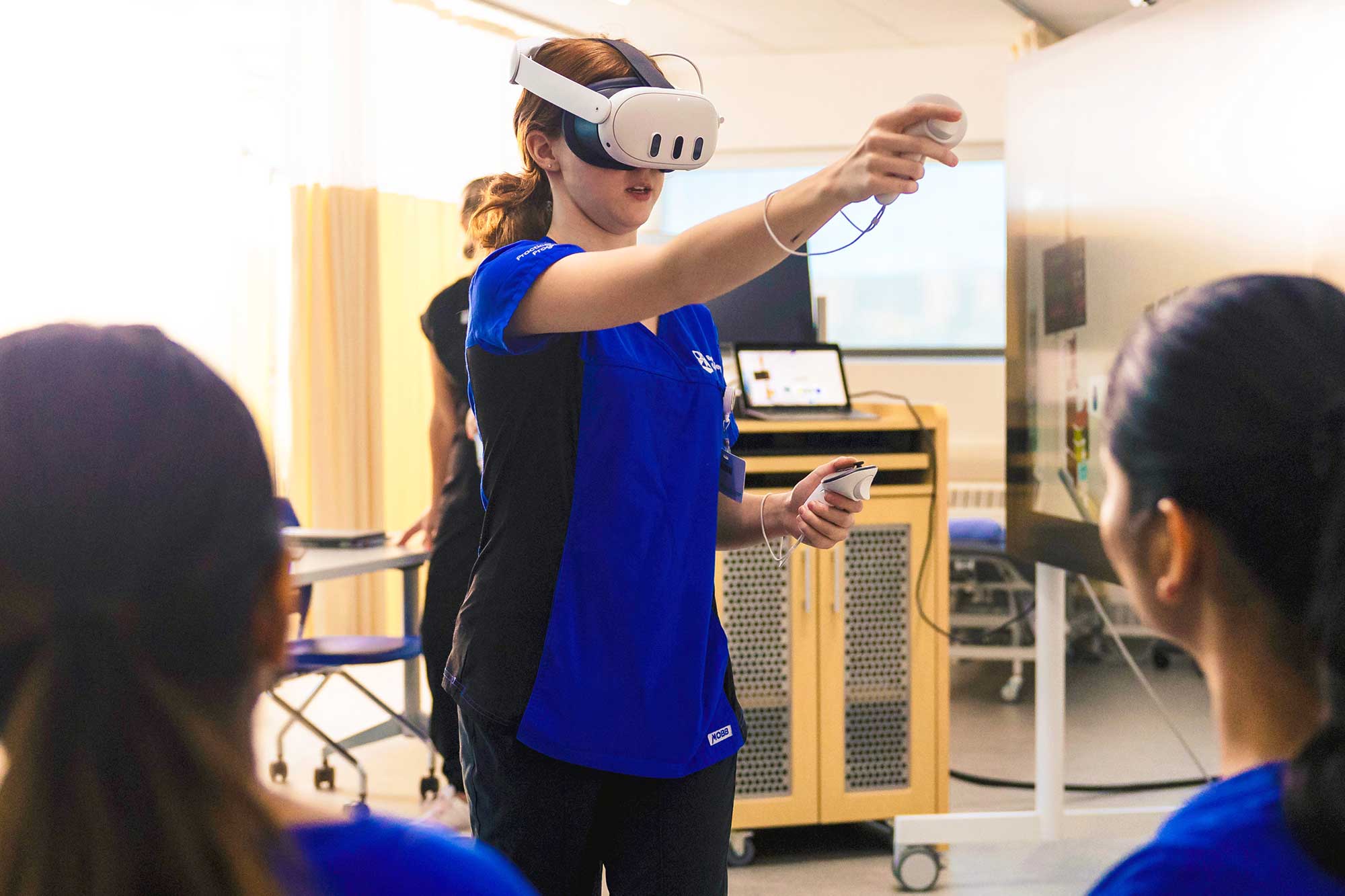
Table of Contents
Name of the heading 1
1- Start your table with the syntax {start-table}
2 - Add an H3 Heading to create a new column (this will be the column title)
3 - List cells as bullet points in a List element
4 - End your table with the syntax {end-table}
Nursing education faces growing challenges as programs work to prepare practice-ready graduates. Inconsistent clinical placements, limited opportunities for repetition, and gaps in evaluation can make it difficult for students to develop the critical skills and judgment needed for safe patient care. Emerging technologies, including simulation and virtual reality, offer solutions to standardize learning and strengthen competency development across programs.
Current Challenges in Nursing Education
Inconsistent Clinical Experiences Across Programs
Clinical placements have long been the cornerstone of nursing education, providing students with hands-on experience and opportunities to develop clinical judgment. These experiences are intended to bridge the gap between classroom learning and real-world practice. However, clinical placements vary widely depending on geographic location, patient population, site availability, and individual instructor expectations.
As nursing programs scale to meet workforce demands, this variability increases, making it difficult to ensure consistent learning opportunities across cohorts and campuses. In my conversations with deans, directors, and faculty across nursing programs, a common concern is the inconsistency of clinical placements, particularly within specialty areas such as obstetrics and pediatrics, where opportunities can be limited or inconsistent due to site availability and competition.
Limited Opportunities for Repetition
Nursing competencies develop through repeated practice across the curriculum, not through single exposures. Traditional clinical placements often limit opportunities for repetition, as students may only encounter certain conditions or perform specific procedures once, or not at all, during rotations. Learning gaps may emerge across the didactic, lab, and clinical environments. These gaps are often identified by multiple instructors, preceptors, or adjunct faculty who observe students at different points throughout their training.
Gaps in Communication and Evaluation
Because students rotate through various clinical sites and work with different educators, each instructor may only see a limited portion of a student’s performance. As a result, learning gaps may be recognized in isolated instances but not consistently documented or communicated across instructors. Research on clinical education highlights that effective identification of student deficiencies depends on consistent observation and timely feedback from educators. When feedback and assessment occur across multiple instructors without a standardized method of observation or documentation, competency gaps may remain fragmented or unrecognized until much later in the curriculum, delaying remediation.
Challenges in Measuring Readiness for Practice and NCLEX
Educators also face challenges measuring readiness for the NCLEX and for safe, independent clinical practice. Predictive examinations administered in lecture-based courses are commonly used to estimate the likelihood of NCLEX success; however, these assessments often identified knowledge gaps late in the curriculum, limiting remediation time. Additionally, readiness for professional practice is not determined solely by performance on didactic assessments. Clinical experiences also serve as an important indicator of student preparedness, as they provide opportunities for students to apply knowledge, demonstrate clinical judgment, and perform essential skills in real-world settings. When clinical exposure is inconsistent or varied across sites, these disparities could further exacerbate learning gaps and potentially influence NCLEX outcomes.
Repetition and Standardized Practice as the Solution
Simulation-based education addresses these challenges by providing repeatable patient scenarios that ensure every student encounters the same core clinical situations. Through simulation, educators can standardize exposure to critical clinical situations that students may or may not encounter during traditional clinical placements. In these environments, students are able to practice essential skills multiple times in a controlled, psychologically safe setting, revisit critical actions, and apply feedback to strengthen both knowledge and clinical judgment. Research has shown that repeated simulation improves performance, enhances confidence, and allows learners to refine clinical reasoning through deliberate practice.
Virtual reality (VR) simulation extends this model by delivering standardized immersive clinical scenarios that students can repeat across cohorts and learning stages. Unlike traditional clinical placements, where learning opportunities vary depending on patient availability and site resources, VR ensures that every student encounters the same patient situations and decision-making challenges. This consistency allows nursing programs to better align learning experiences with curricular competencies and licensure expectations. By integrating VR and standardized simulation into nursing curriculum, programs can support consistent competency development, strengthen clinical judgment, and better prepare students for the Next Generation NCLEX while producing confident, practice-ready graduates.

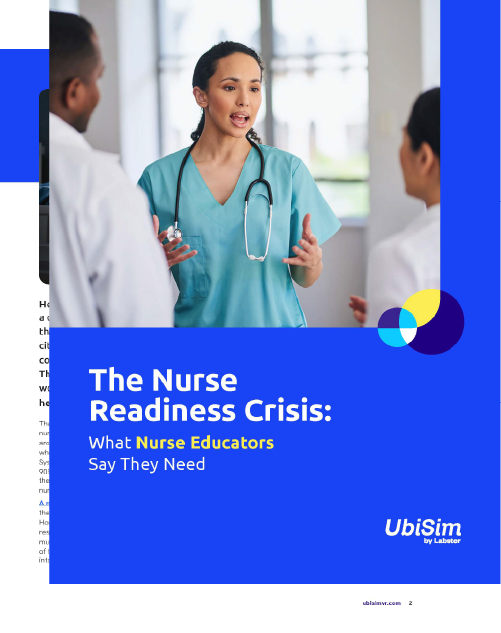
Download Report: What Nurse Educators Say They Need
Hear what faculty say they need to overcome the nurse readiness crisis, in their own words.
How Does Virtual Reality Standardize Clinical Practice in Nursing Education?
Addressing Gaps in Clinical Education
As nursing programs work to address the challenges of inconsistent clinical exposure and limited opportunities for repetition, many institutions are turning to emerging technologies to strengthen competency development. One approach gaining traction is the use of VR simulation to create standardized learning experiences that supplement traditional clinical education.
How VR Creates Consistent Clinical Experiences
Platforms such as UbiSim provide immersive virtual reality simulations that allow nursing students to engage in realistic patient care scenarios within a controlled learning environment. Unlike traditional clinical placements, where exposure to specific patient conditions may depend on chance, VR enables educators to ensure that every student encounters critical scenarios that support the development of clinical judgment and decision-making. Students can repeatedly practice essential nursing skills, respond to patient deterioration, and make clinical decisions without risking harm to real patients.
The Importance of Standardization
Standardization is a key advantage of VR simulation. By delivering consistent scenarios across cohorts and campuses, educators can ensure that all students are exposed to the same learning objectives and competency expectations. This consistency is particularly valuable for programs that operate across multiple locations or that experience variability in clinical placement availability. Through standardized virtual experiences, institutions can reduce learning gaps and better align training with the competencies assessed on the Next Generation NCLEX.
Repetition and Deliberate Practice
In addition to providing consistent learning opportunities, VR simulation also allows for repetition and deliberate practice. Research in simulation-based education shows that repeated exposure to clinical scenarios strengthens clinical reasoning, improves confidence, and enhances skill retention. With platforms like UbiSim, students can repeat scenarios, reflect on their decision-making, and apply feedback to improve performance over time. This iterative process helps students strengthen clinical judgment through repeated decision-making and reflection.
Data-Driven Insights
Virtual reality simulation also provides educators with valuable insight into student performance while supporting more standardized evaluation of competency development. Platforms such as UbiSim incorporate AI-enhanced analytics that analyze both individual student and cohort performance across the same simulated clinical scenarios. Because each learner engages with standardized patient cases, educators can compare performance using consistent benchmarks rather than relying on variable clinical experiences. These analytics highlight patterns in clinical decision-making and identify learning gaps early in the curriculum, allowing faculty to implement targeted remediation and ensure that all students meet the same competency expectations before progressing. By combining standardized scenarios with objective performance insights, VR simulation helps programs maintain consistent preparation and protect learning outcomes as cohorts grow.
Blending VR and Traditional Clinicals
By integrating standardized virtual scenarios alongside clinical placements and skills labs, nursing programs can ensure that students receive consistent exposure to essential patient care situations. This blended approach reduces the variability often inherent in clinical placements while preserving the valuable experiential learning that occurs in real healthcare environments. Rather than replacing traditional clinical education, virtual reality simulation serves as a complementary strategy that enhances opportunities for skill development, clinical reasoning, and standardized learning experiences across students.
Scaling for the Future of Nursing Education
As nursing programs expand to meet workforce demands, maintaining consistent preparation for licensure becomes increasingly important. Standardized simulation experiences, particularly those delivered through virtual reality, provide a scalable way to ensure that all students encounter critical patient care situations and develop clinical judgment. By reducing variability in training and identifying competency gaps earlier, standardized practice models can help institutions protect NCLEX outcomes while preparing graduates who are confident and practice-ready.
Give your learners hands-on clinical simulation training that builds confidence, improves decision-making, and prepares them for real-world patient care in a safe, scalable virtual environment.
FAQs
Heading 1
Heading 2
Heading 3
Heading 4
Heading 5
Heading 6
Lorem ipsum dolor sit amet, consectetur adipiscing elit, sed do eiusmod tempor incididunt ut labore et dolore magna aliqua. Ut enim ad minim veniam, quis nostrud exercitation ullamco laboris nisi ut aliquip ex ea commodo consequat. Duis aute irure dolor in reprehenderit in voluptate velit esse cillum dolore eu fugiat nulla pariatur.
Block quote
Ordered list
- Item 1
- Item 2
- Item 3
Unordered list
- Item A
- Item B
- Item C
Bold text
Emphasis
Superscript
Subscript
No. Virtual reality simulation is designed to complement, not replace, traditional clinical education. While clinical placements provide valuable real-world patient interactions, VR simulation ensures that every student encounters key clinical situations and decision-making challenges. When integrated alongside clinical and lab experiences, VR simulation helps reduce variability in training and supports consistent competency development.
Yes. Virtual reality simulation places students in immersive patient care scenarios where they must assess patients, prioritize interventions, and make clinical decisions. Because these scenarios mirror real clinical situations, students can practice decision-making in a safe environment while receiving feedback that helps refine their clinical judgment.
Standardized simulation scenarios allow faculty to observe student performance across the same clinical situations. When combined with analytics and performance tracking, educators can identify patterns in clinical decision-making and address competency gaps earlier in the curriculum rather than discovering them late in the program.



Hayley Conner, Ed.D, MSN, RN, is a registered nurse and nursing educator with experience teaching in RN and LPN programs across classroom, simulation, clinical, and laboratory settings. She holds a master's degree in Nursing Education and a doctorate in Higher Education Leadership. Hayley works with UbiSim customers to support VR implementation. She is passionate about advancing innovative approaches that strengthen nursing education and student readiness for practice.
Explore more
.jpg)
What a UbiSim VR Simulation Partnership Looks Like
From picking VR software to building faculty confidence, here's what a real clinical partnership with UbiSim looks like, from a nurse who lives it daily.
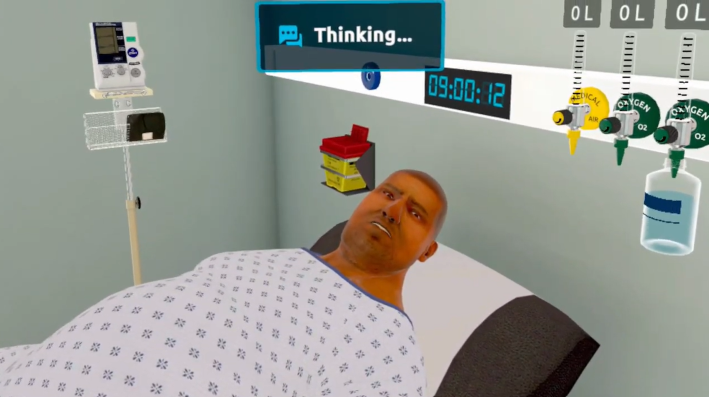
The Benefits of AI Patient Dialogue in VR Nursing Simulation
AI patient dialogue brings real conversation practice to VR nursing simulation, building learner confidence and empathy while helping programs scale smarter
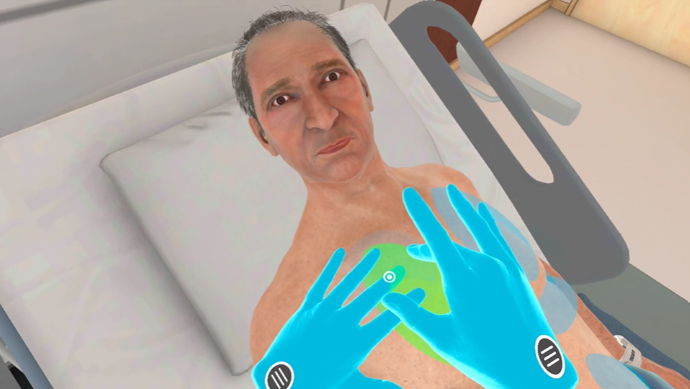
Enhanced Auscultation and Percussion Assessment
Explore UbiSim VR enhanced auscultation and new percussion assessment features built for nursing education