
From 30 Minutes to 3: How AI Enhanced Analytics Transforms Debriefing Preparation
.png)
Table of Contents
Name of the heading 1
1- Start your table with the syntax {start-table}
2 - Add an H3 Heading to create a new column (this will be the column title)
3 - List cells as bullet points in a List element
4 - End your table with the syntax {end-table}
It's 7:45 AM, and Professor Martinez has fifteen minutes before her clinical group arrives for debriefing. Yesterday, twenty-three students completed the sepsis recognition scenario. She knows the data is waiting—who identified early warning signs, who missed critical assessments, and who prioritized interventions. She also knows that reviewing twenty-three performance logs means choosing between thorough preparation and showing up on time.
This tension isn't unique to Professor Martinez. It's the daily reality for nurse educators everywhere. Simulation platforms capture detailed performance data, but extracting meaningful insights has always required significant manual effort. The information exists; accessing it efficiently hasn't.
Until now.
Why It Matters
Simulation generates valuable performance data, but reviewing it has always consumed precious faculty time. AI Enhanced Analytics: Scenario Performance Insights changes that equation by condensing 20-30 minutes of manual review into a 2-3 minute summary—giving educators more time for what matters most: meaningful debriefing and clinical judgment coaching.
Key Takeaways by Stakeholder
- For Nurse Educators: Walk into every debrief fully prepared with clear insights on learner strengths, gaps, and discussion priorities; spend debrief time supporting reflective learning instead of reconstructing events.
- For Program Directors: Access aggregated performance data tied to NCLEX Client Needs; demonstrate competency development and curriculum effectiveness with exportable evidence for accreditation.
- For Clinical Nurse Educators & CNOs: Quickly identify which staff members need additional support in specific competency areas; provide targeted interventions based on documented performance patterns rather than subjective impressions.
Teaching Smarter, Not Harder
UbiSim's AI Enhanced Analytics: Scenario Performance Insights transforms debriefing preparation by doing what AI does best—rapidly analyzing datasets and surfacing patterns—while leaving what matters most firmly in educators' hands: the facilitation, the context, the clinical judgment coaching that shapes competent nurses.
The technology analyzes simulation data across multiple dimensions: critical actions taken, common performance gaps, prioritized interventions, and clinical decision timing. It organizes insights under NCLEX Client Needs categories and presents them in plain language. What once required 20-30 minutes of manual review now takes 2-3 minutes to digest.
"AI Enhanced Analytics gives educators an instant view of learner performance, helping them spend less time reviewing data and more time on meaningful debriefing," explains Christine Vogel, MSN, RN, CHSE, CHSOS, Lead Nurse Educator at UbiSim. "It identifies the most frequently observed critical actions and performance gaps, categorized by NCLEX Client Needs categories and subcategories, helping educators spot trends across the cohort. Learners receive timely, personalized feedback that drives reflection, strengthens learning, and builds accountability."
The result isn't just time savings—though those matter to faculty managing heavy teaching loads. The result is that educators walk into debriefing sessions genuinely prepared to facilitate deep learning conversations.
AI as Teaching Assistant, Not Replacement
Here's what's critical to understand: the AI doesn't score learners, doesn't determine grades, and doesn't interpret what performance means in context. Those responsibilities remain exactly where they should—with nurse educators who bring clinical expertise, pedagogical knowledge, and understanding of individual learner needs.
Think of AI Enhanced Analytics as an exceptional teaching assistant who reviews all the simulation recordings, notes the patterns, and prepares a concise briefing document. The assistant surfaces most frequently observed critical actions, common performance gaps, and patterns organized by clinical judgment framework. Then you, the educator, guide the actual teaching—interpreting context, facilitating reflection, connecting actions to patient outcomes, and coaching clinical reasoning.
Whether you use PEARLS, Plus/Delta, advocacy-inquiry, or another debriefing model, the AI simply provides your starting point. You determine what patterns mean, which require immediate attention, and how to guide learners toward deeper understanding. The technology extends your capacity; it doesn't replace your expertise.
This philosophy matters profoundly as AI capabilities expand across healthcare education. Learners need human educators who can read the room, ensure psychological safety, recognize when a learner is struggling, and connect clinical performance to the deeper mission of nursing. Technology should make human work more effective, not attempt to replicate it.

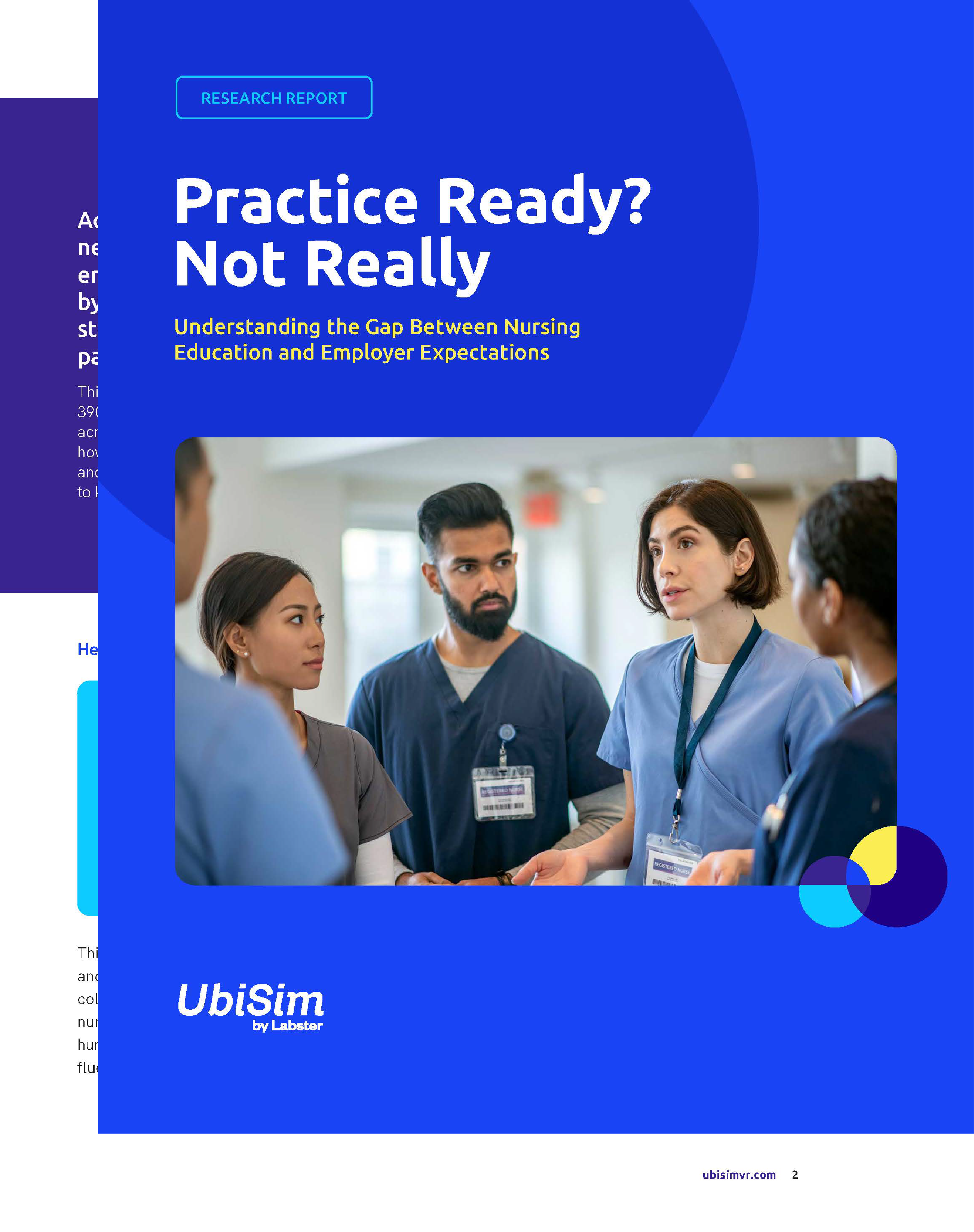
Download Report: Gaps Between Nursing Education and Employer Expectations
See the study that reveals how AI is changing hospital hiring expectations for new nurses.
From Individual Insights to Program Intelligence
The value extends beyond individual debrief preparation. At the cohort level, the tool reveals curriculum effectiveness and learning trends that inform program improvement.
When Professor Martinez reviews her twenty-three students' performance, she's preparing for today's debrief. When she examines aggregated data across all sections that completed the scenario this semester, she's gathering evidence about whether students are developing competency in priority setting and early intervention—areas the program recently strengthened.
This dual-level insight supports multiple stakeholder needs. For frontline faculty, it means walking into every debrief prepared and confident. For program directors, it means having quantifiable data on competency development tied directly to NCLEX Client Needs categories. For accreditation, it provides exportable evidence of systematic assessment, identified learning needs, and responsive curriculum adjustments.
Hospital-based education programs gain similar advantages. Clinical nurse educators can quickly identify which staff members are progressing appropriately and which need additional support in specific competency areas. Nurse residency program directors can track cohort development and provide targeted education where patterns reveal gaps.
"In hospital settings, we're often managing orientation programs for multiple cohorts simultaneously—new graduates, experienced nurses transitioning to specialty units, and travel nurses who need competency validation quickly," notes Maggie Major, RN, Ed.S., Nursing Simulation Consultant. "AI Enhanced Analytics lets us pinpoint exactly where each practitioner stands without spending hours in manual review. We can confidently document competency attainment for regulatory requirements while ensuring no one moves to independent practice before they're truly ready. That's patient safety and workforce efficiency working together."
Timely Feedback That Reinforces Learning
Timely feedback matters enormously in simulation-based learning. When learners receive specific insights while the experience is still vivid, they can connect their decisions to patient outcomes more effectively.
AI Enhanced Analytics generates summaries that learners receive alongside scenario completion. These aren't scores or grades—they're structured observations designed to promote reflection rather than defensiveness. Structured questions help learners think through their clinical reasoning: What cues did you notice first? What made you prioritize that intervention? What would you do differently?
For educators, knowing that learners have already reviewed their individual performance summary changes how debriefing time is spent. Instead of walking through each decision sequentially, faculty can focus on the "why" behind decisions, on comparing different approaches, and exploring how context influences clinical reasoning.
Supporting Workforce Development Through Evidence
The broader context matters. Nursing programs face extraordinary pressure: expanded enrollment demands from state workforce initiatives; clinical placement shortages; accreditation requirements for systematic competency assessment; and employer expectations that graduates arrive practice-ready.
Simulation helps address these capacity constraints, but only when programs can demonstrate that virtual experiences produce genuine learning and documented competency development. AI Enhanced Analytics makes that demonstration clearer and more efficient.
When a program can show—with aggregated data across hundreds of scenario completions—that learners consistently demonstrate improvement in priority setting, timely assessment and reassessment, and evidence-based intervention selection, that's powerful evidence supporting program expansion proposals and workforce development funding.
The mission hasn't changed: preparing nurses who provide safe, effective, compassionate care. The challenge has intensified: doing that for more learners with constrained resources and increasing accountability. Technology that makes educators more effective at their core work—teaching clinical judgment—directly supports that mission.
What This Means Tomorrow Morning
Professor Martinez arrives at 7:55 AM. She's spent eight minutes reviewing the AI-generated performance summary for her clinical group. She knows that eighteen learners identified sepsis criteria correctly, but twelve missed the significance of declining urine output. She knows communication with the healthcare provider was strong overall, but reassessment after interventions needs attention.
She's prepared. Not because she spent her evening reviewing logs, but because the technology surfaced what matters most. Now she can use the next sixty minutes for what only she can do: guiding twenty-three nursing students to reflect on their clinical decisions, and helping them understand why those choices matter when every decision affects a human life.
The AI handled the data analysis. Professor Martinez handles the teaching. And her learners receive the benefit of both—efficient preparation that enables deeper learning.
UbiSim's AI Enhanced Analytics is available now. To learn more about how this feature can support your program's debriefing preparation and competency assessment, visit ubisimvr.com or contact our team for a demonstration.
Give your learners hands-on clinical simulation training that builds confidence, improves decision-making, and prepares them for real-world patient care in a safe, scalable virtual environment.
FAQs
Heading 1
Heading 2
Heading 3
Heading 4
Heading 5
Heading 6
Lorem ipsum dolor sit amet, consectetur adipiscing elit, sed do eiusmod tempor incididunt ut labore et dolore magna aliqua. Ut enim ad minim veniam, quis nostrud exercitation ullamco laboris nisi ut aliquip ex ea commodo consequat. Duis aute irure dolor in reprehenderit in voluptate velit esse cillum dolore eu fugiat nulla pariatur.
Block quote
Ordered list
- Item 1
- Item 2
- Item 3
Unordered list
- Item A
- Item B
- Item C
Bold text
Emphasis
Superscript
Subscript
No. The AI surfaces patterns and organizes performance data—it doesn't score learners, determine grades, or interpret what performance means in context. Educators retain full responsibility for assessment, grading, and determining how insights apply to individual learners. Think of it as a teaching assistant who prepares the briefing document so you can focus on the actual teaching.
AI Enhanced Analytics generates exportable reports that document systematic competency assessment, identified learning needs, and evidence of curriculum effectiveness—all organized under NCLEX Client Needs categories that align with accreditation standards. Programs can demonstrate both individual learner progression and cohort-level trends tied directly to program outcomes.
All performance data remains within UbiSim's secure, FERPA-compliant platform. Faculty control who has access to individual learner data and aggregated cohort reports. The AI analyzes data to generate insights, but doesn't store or share performance information outside your institution's controlled environment.



Tracy's work sits at the intersection of clinical learning and product strategy helping the field understand not just what VR simulation can do, but why it matters right now. She is passionate about connecting innovation with real-world impact and championing nurses at the forefront of one of healthcare's most critical transformations.
Explore more
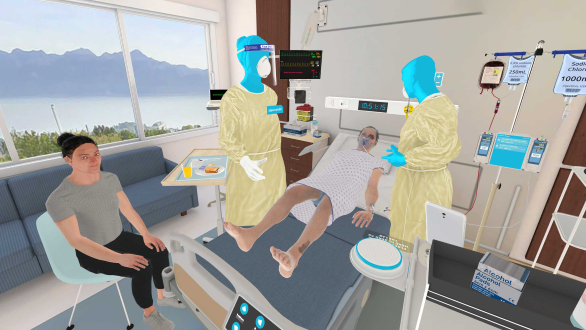
Teaching Clinical Judgment With UbiSim Multiplayer VR
Teach nursing learners to communicate when someone else is in the room, with pre-brief, role, and debrief tips for multiplayer VR simulation.
.jpg)
What a UbiSim VR Simulation Partnership Looks Like
From picking VR software to building faculty confidence, here's what a real clinical partnership with UbiSim looks like, from a nurse who lives it daily.
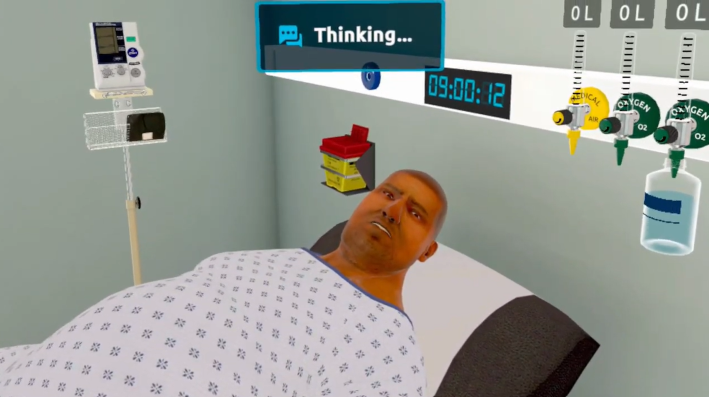
The Benefits of AI Patient Dialogue in VR Nursing Simulation
AI patient dialogue brings real conversation practice to VR nursing simulation, building learner confidence and empathy while helping programs scale smarter