Midterms: The Hidden Breakpoint in the Nursing Workforce Pipeline

Table of Contents
Name of the heading 1
1- Start your table with the syntax {start-table}
2 - Add an H3 Heading to create a new column (this will be the column title)
3 - List cells as bullet points in a List element
4 - End your table with the syntax {end-table}
Many people think of midterms as just another test, but in nursing education, they are much more than that. This is when academic stress, clinical challenges, and self-doubt come together, and students may question if they can keep going. Imagine a student who does well in lectures but now faces a patient in clinical. Suddenly, they struggle to recall the steps for safe medication administration or how to communicate with a distressed patient. The pressure makes them question their knowledge, and even small mistakes feel huge. Midterms are not only about passing. They can show what might happen in the workforce. If students struggle to connect classroom learning to real practice, feel too stressed, or lose confidence, the effects go beyond one grade. These moments can decide if students finish their program and become nurses.
Burnout is a real issue for nursing students. One study found that burnout leads to exhaustion, pessimism, and lower grades. Faculty might notice warning signs such as missing class, not joining in, pulling away from group work, dropping grades, or stress and frustration. When students lose interest, fewer go on to join the workforce. This has serious effects. The National Council of State Boards of Nursing has warned about burnout and retention, with many nurses considering leaving in the next few years. With the profession already under strain, nursing programs must watch for warning signs in their classrooms. When students disengage or lose interest, the pool of future nurses entering the workforce shrinks, with major, far-reaching consequences for an already-stressed healthcare system.
What are students telling us they need to be practice ready?
Students are not saying they lack commitment. They want support that fits the real challenges of nursing education. UbiSim’s research on nurse readiness found that students struggle with stress, heavy workloads, and applying classroom knowledge in real-world situations. Many also feel unprepared for stressful clinical work and tough patient care. Still, most students are excited about their future in nursing.
This combination is important. The problem is not motivation, but the gap between what students want and how prepared they feel. If students cannot see how theory connects to practice, midterms may make them feel out of place. Programs risk losing talented future nurses, not because they cannot succeed, but because the environment is not helping them succeed fast enough.
Why are midterms a retention opportunity?
Midterms reveal more than just how well students know the material. They also show what students are going through. By mid-semester, patterns are clear. Students struggling with workload, time management, anxiety, or clinical confidence often show signs now. This is a chance to help before problems get worse and students drop out.
This is also the best time to offer support. A quick check-in, a focused review session, or hands-on learning can help students get back on track. The goal is not to make things easier, but to give students a fair chance to meet the standards. In nursing, being ready is more than memorizing facts. Students need to build judgment, set priorities, communicate well, and handle pressure. These skills get stronger with practice.

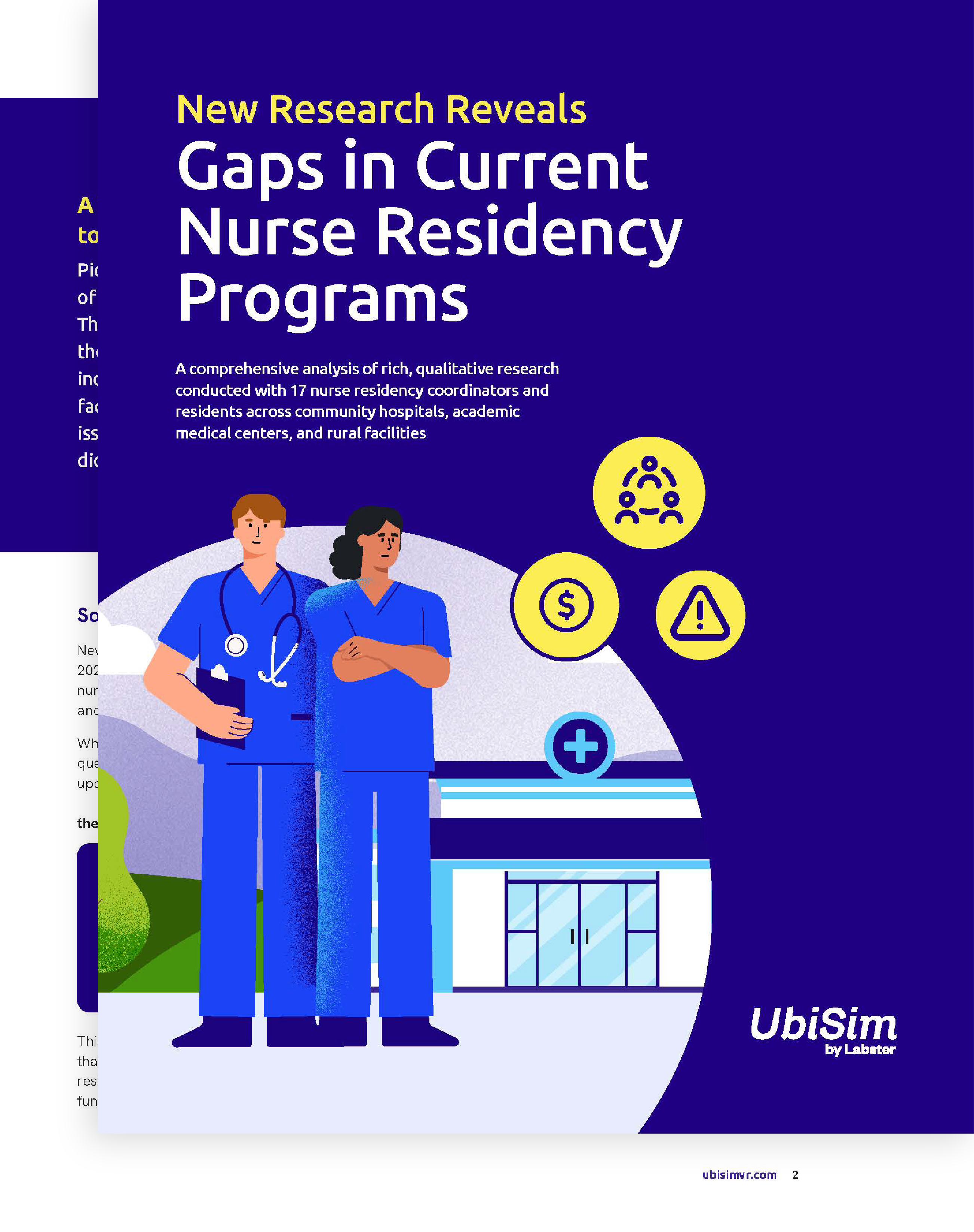
Download Report: Gaps in Current Nurse Residency Programs
Fill out the form for the free report with actionable insights for nurse residency programs.
What can we do to ease the stress students feel at midterms?
Nursing programs do not need to start from scratch to help students stay. They can:
- Treat midterm data as an early warning sign. Pay attention to more than just test scores; track attendance, clinical performance, and student feedback as well.
- Have faculty check in with students more often during stressful weeks. Students often need reassurance, clear guidance, and support more than another reminder to “study harder.”
- Give students plenty of chances to practice in realistic situations. Simulations help them shift from just learning to making real decisions.
- Identify which parts of the semester are most challenging. Some groups of students need extra help earlier, especially in basic courses.
- Make sure mental health support is easy to find and use. Stress is not just a side issue in nursing school; it is part of the learning process.
- Link every big idea to its use at the bedside. When students see why something matters, they remember it better and care more about their studies.
How can VR strengthen nurse retention?
Virtual reality offers nursing programs a hands-on way to help students during the toughest part of the semester. It allows students to practice high-stakes patient care safely, build confidence by repeating tasks, and learn from mistakes without any risk to patients. This is important because most students do not need more facts; they need more opportunities to use what they know. VR helps bridge that gap. It is especially useful for practicing medication safety, communication, recognizing patient decline, and handling tough situations, such as end-of-life care.
VR is not only about technology. It is one way to help students stay in the program. When students feel ready, they are more likely to stay involved, handle stress, and graduate with confidence.
How can nursing programs use VR to improve retention?
- Match VR scenarios to what students are learning at midterms. They should practice the concepts they are studying right now.
- Use VR for repeated practice, not just a single try. Students build confidence when they can repeat and improve.
- Include guided debriefing after VR sessions. Reflecting helps students link what they do, how they feel, and their clinical decisions.
- Add high-stress patient scenarios. Students need to practice handling situations that feel like real clinical pressure.
- Check how confident students feel, not just whether they finished a scenario. A student who completes a session might still need more help to feel prepared.
A call to action
Midterms are a chance for nursing programs to shape what happens next. If students feel burned out, unsure, or struggle to link theory to practice, the answer is not to wait and hope things get better. Instead, step in early, teach with purpose, and give more chances for hands-on learning. This is how nursing programs can support both student success and workforce readiness. When we see midterms as a key moment for retention, we are not just helping students pass; we are helping shape the future of nursing.
Give your learners hands-on clinical simulation training that builds confidence, improves decision-making, and prepares them for real-world patient care in a safe, scalable virtual environment.
FAQs
Heading 1
Heading 2
Heading 3
Heading 4
Heading 5
Heading 6
Lorem ipsum dolor sit amet, consectetur adipiscing elit, sed do eiusmod tempor incididunt ut labore et dolore magna aliqua. Ut enim ad minim veniam, quis nostrud exercitation ullamco laboris nisi ut aliquip ex ea commodo consequat. Duis aute irure dolor in reprehenderit in voluptate velit esse cillum dolore eu fugiat nulla pariatur.
Block quote
Ordered list
- Item 1
- Item 2
- Item 3
Unordered list
- Item A
- Item B
- Item C
Bold text
Emphasis
Superscript
Subscript
Midterms mark the first time many students must connect weeks of classroom learning to real clinical decision-making all at once, under pressure. For students already managing heavy workloads and anxiety, this convergence of stress and self-doubt can feel insurmountable. It's not a lack of commitment; it's the gap between knowing theory and feeling ready to act on it. When that gap feels too wide, some students conclude that nursing isn't for them, even when they have every ability to succeed.
The pipeline starts in the classroom. When students disengage mid-program due to burnout, exhaustion, or loss of confidence, they never make it to the workforce, shrinking the pool of available nurses before the shortage even begins. The National Council of State Boards of Nursing has flagged burnout as a serious concern, with many practicing nurses already considering leaving the profession. Addressing burnout in nursing school isn't just about academic retention; it's an early intervention for a healthcare system already under strain.
The value of VR isn't the technology itself. It's what the technology enables: repeated, low-stakes practice in high-pressure situations. Most struggling students don't need more information; they need more opportunities to apply what they already know. VR gives them a space to make mistakes, build judgment, and gain the kind of confidence that reduces the anxiety driving many students to disengage. When students feel more prepared, they're more likely to persist through the hardest stretches of their program.


Margaret "Maggie" Major is a dynamic educator and innovator in the field of nursing education. With an Ed.S. in Education specializing in Educational Technology from Walden University, Maggie brings a wealth of experience from her roles in secondary and post-secondary education. Her expertise spans curriculum development, online learning, and educational technology integration, making her an invaluable asset in advancing nursing education through cutting-edge simulation software. Her background as a Nurse Aide Program Coordinator and long-standing Adjunct Faculty member at Harrisburg Area Community College has given her unique insights into the evolving needs of nursing education. By championing the use of simulation and technology in nursing education, Maggie is playing a crucial role in shaping the future of healthcare education, preparing nurses who are confident, competent, and technologically adept for the challenges of modern healthcare delivery.
Explore more
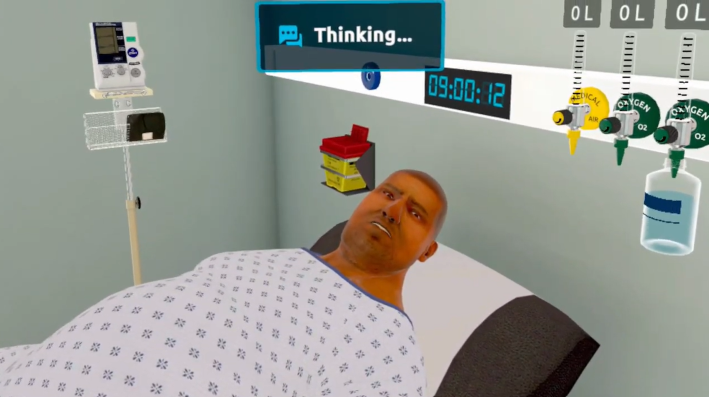
The Benefits of AI Patient Dialogue in VR Nursing Simulation
AI patient dialogue brings real conversation practice to VR nursing simulation, building learner confidence and empathy while helping programs scale smarter
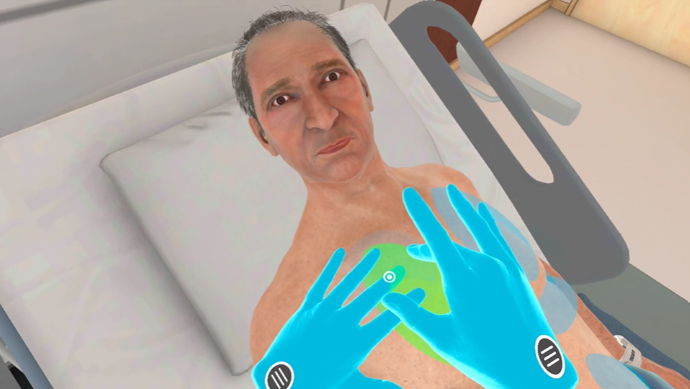
Enhanced Auscultation and Percussion Assessment
Explore UbiSim VR enhanced auscultation and new percussion assessment features built for nursing education

How Immersive VR Prepares Nurses for the Demands of Real Patient Care
Discover how immersive VR simulation builds clinical judgment and confidence in nurses using a real Med-Surg scenario as the guide.