Deeper Practice. Enterprise-Ready Security. More Complete Care.
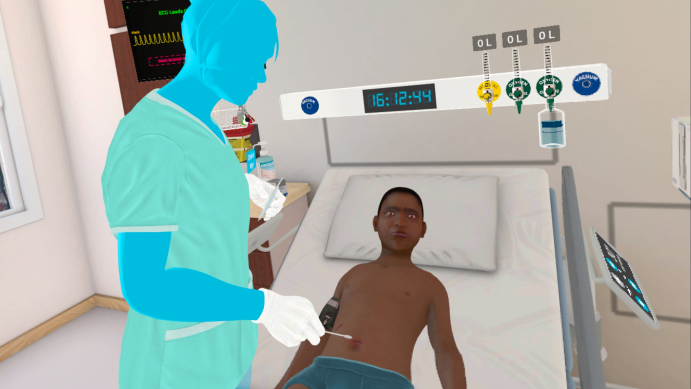
Table of Contents
Name of the heading 1
1- Start your table with the syntax {start-table}
2 - Add an H3 Heading to create a new column (this will be the column title)
3 - List cells as bullet points in a List element
4 - End your table with the syntax {end-table}
The best clinical education doesn't happen in isolated moments. It happens across a continuum. A patient you first meet pre-op, follow through surgery, and see again on the other side, managing complications or preparing to go home.
UbiSim's latest update, Version 1.20, brings that continuity to life.
This release is built around depth. Two existing patients in the catalog get their next chapter. A clinical skill set that was already powerful gets more complete. And for the first time, our infant patient, Rose, enters the post-operative world.
Let's walk through what's new.
Incisions & Dressings — Phase 2
Phase 1 gave educators what they'd been asking for: realistic post-surgical incisions on patient avatars, configurable dressing types, and the ability to incorporate incision care into their simulation curriculum.
Phase 2 makes it clinical.
Learners can now cleanse incision sites using 0.9% sodium chloride swabsticks and obtain culture samples across all incisions. The full workflow is now available for adult patients, child patient Max, and infant patient Rose.
That matters because the full workflow is rarely what learners get in clinical placement.
Incision care sounds foundational. And it is. But what actually happens in a clinical rotation is unpredictable. A student might observe a dressing change once. They might never see a culture sample taken. They almost certainly won't get enough repetitions to feel confident before they're the one standing at the bedside, making the call.
In VR, that changes. Learners can repeat the full process — assess, cleanse, culture sample, dress — across different incision states and with different patients until it's no longer unfamiliar. Until it's just what they know how to do.

Rose Gets Incisions
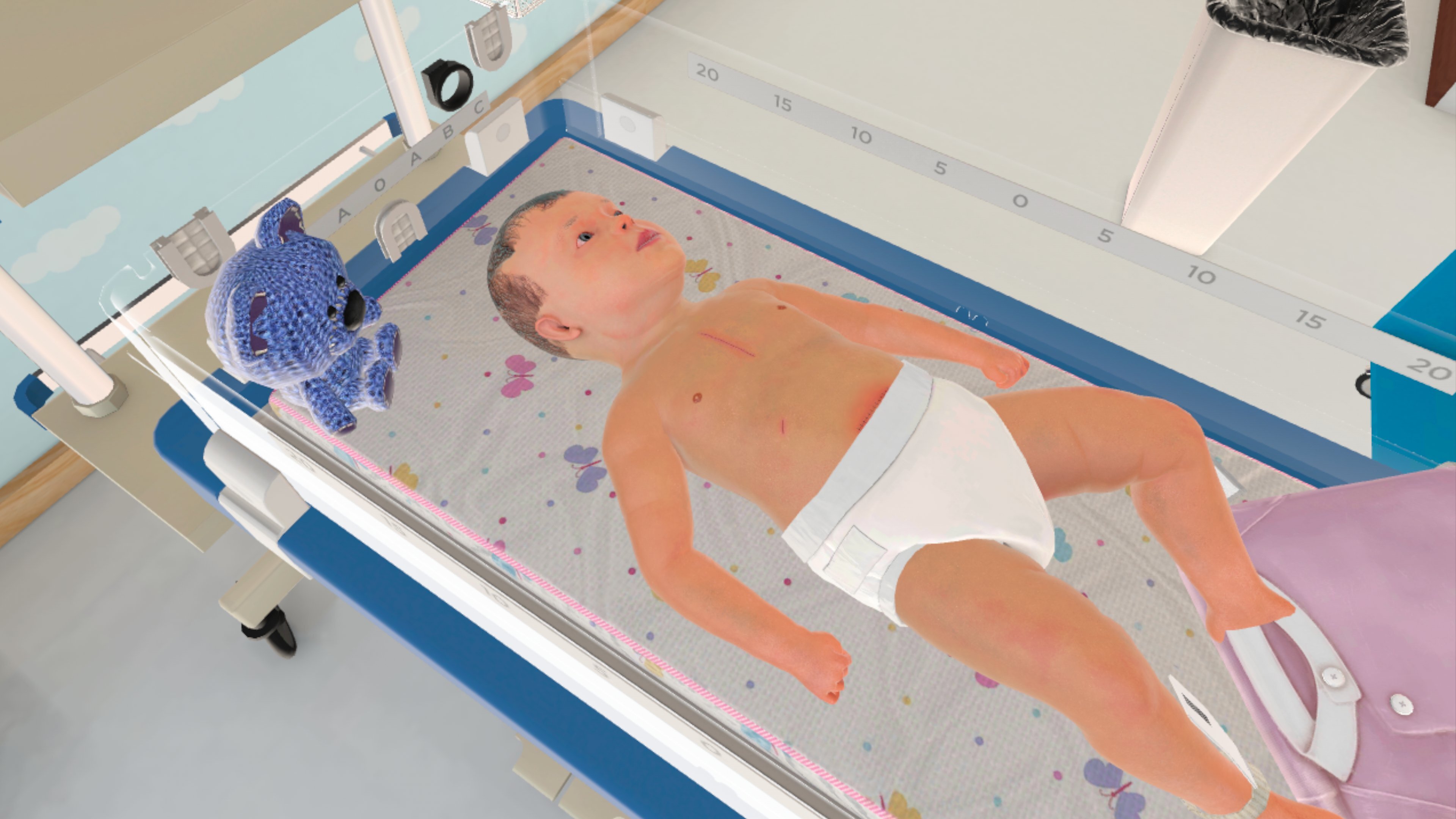
For the first time, UbiSim's infant patient Rose has post-surgical incisions, and she now supports the complete incision-care workflow alongside adult and pediatric patients.
Infant post-op care is one of the hardest skills to access before clinical placement. Pediatric surgical cases aren't guaranteed in rotations. Infant cases are even less so. And when they do come up, learners who have never practiced incision assessment or cleansing on an infant patient are encountering it for the first time under real pressure.
Rose changes that. Programs with a maternal-child or pediatric nursing curriculum can now put learners in front of an infant post-op case — repeatedly, safely, and with the full clinical workflow intact — before those learners ever step into a pediatric unit.


Watch Now: AI-Enhanced Debriefing Builds Clinical Judgment
Fill out the form to learn how structured, data-driven debriefing helps graduates transition from eligibility to real-world readiness.
Two New Post-Operative Scenarios
These aren't new patients. They're the next chapter for two patients your learners already know.
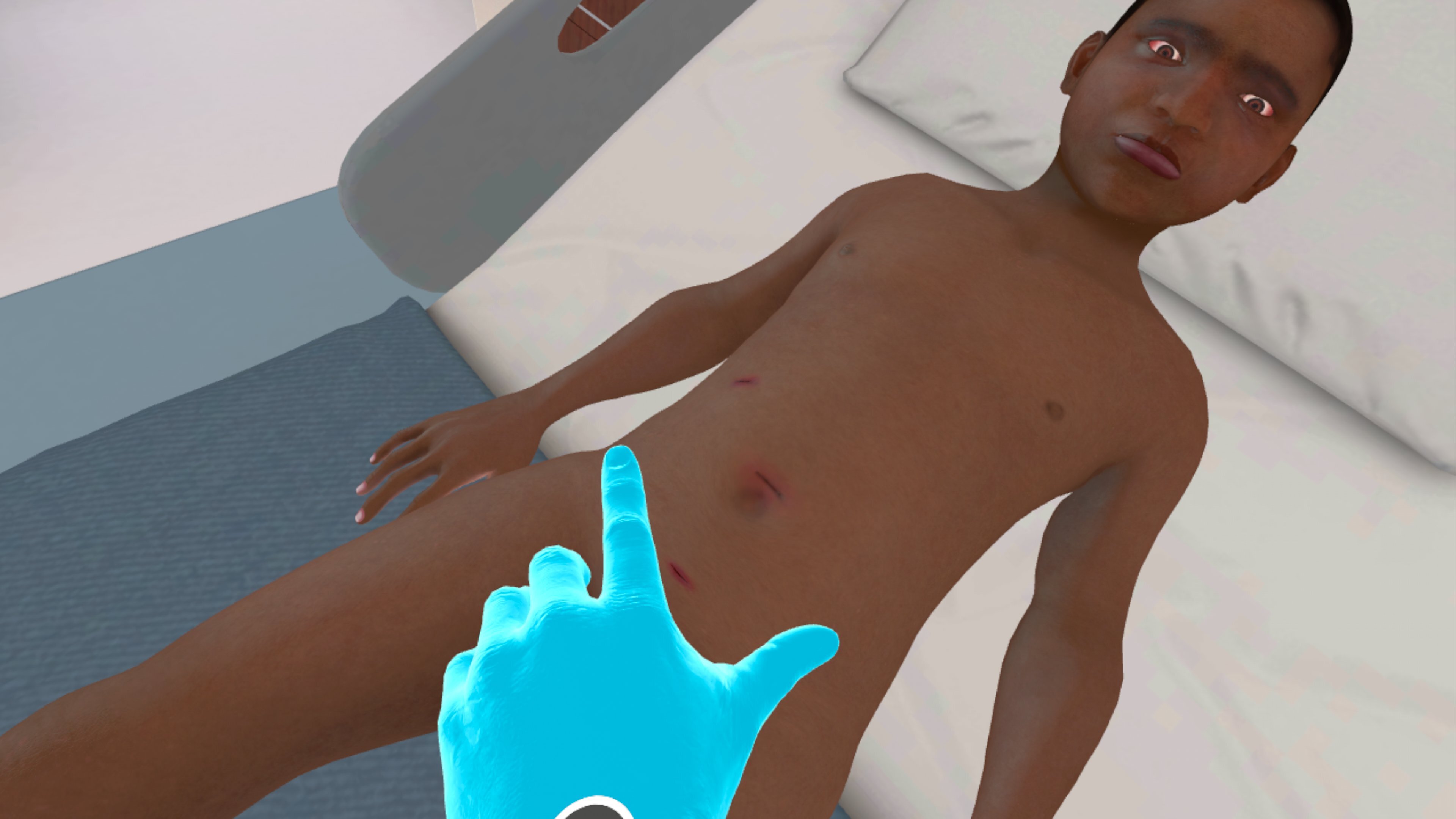
Anthony Hawkins — Post-op Appendectomy Infection Assessment
Anthony Hawkins is 9 years old. He arrived in the Emergency Department in the early hours of the morning with his father, two days into a worsening fever, nausea, and abdominal pain that wouldn't quit. Labs, imaging, and a pediatric surgical consult confirmed what Dr. Einhorn suspected: appendicitis. Anthony went to surgery. Now he's on the other side.
But something isn't right.
His incision site is showing signs of infection. Learners must conduct a focused post-op assessment, recognize what they're seeing, cleanse the site, obtain a culture sample, apply dressings, and prioritize interventions to prevent what a missed surgical site infection can become: sepsis.
This is the case that tests whether learners have built real clinical judgment: not just the ability to follow a checklist, but the instinct to notice something subtle and act on it fast, in a pediatric patient where the stakes are high.
Part 1 puts learners at Anthony's bedside before surgery. Part 2 puts them there after, when the outcome is still being determined.
Pediatric post-op infection cases are genuinely rare in clinical settings. The opportunity to practice recognition and response in a controlled, repeatable environment is exactly what simulation is for.
Sharif Amari — Post-op CABG Discharge
Sharif Amari is 56 years old. He was mowing the lawn when the chest pain started. He drove himself to the Community Emergency Department, where the EKG confirmed what the team feared: a STEMI. The Code STEMI team responded, initiated treatment, and arranged transfer to a regional medical center for an Angiography. Part 1 put learners at Sharif's bedside in that critical window, managing a high-acuity cardiac emergency in a community hospital without a cath lab.
He made it. He had surgery. And now he is five days out from open heart surgery, stable, and almost ready to go home.
Almost.
Learners conduct a postoperative cardiovascular assessment, identify priority findings, manage pain, care for incision sites, prevent respiratory complications, and then do one of the most underrated things in nursing: prepare a patient for what comes next. Medication teaching. Lifestyle counseling. Discharge education that actually sticks.
Part 1 followed Sharif into the operating room. Part 2 follows him to the door, and asks learners to make sure that when he walks through it, he doesn't end up back in a hospital bed three weeks later.
Discharge readiness and readmission prevention are among the highest-stakes moments in cardiac care, and among the most undersimulated in nursing education. This scenario fills that gap directly.
Both scenarios are turnkey, mapped to AACN Essentials and NGN competencies, and ready to launch from the catalog today.

Aligned with the 2026 NCLEX-RN Test Plan
Version 1.20 arrives at an important moment for nursing education. The updated NCLEX-RN Test Plan takes effect on April 1, 2026, replacing the 2023 version. Updated every three years by the National Council of State Boards of Nursing (NCSBN), the new test plan reflects evolving expectations for entry-level nursing practice.
The overall structure of the exam remains consistent: Computerized Adaptive Testing, Next Generation NCLEX item formats, and the clinical judgment measurement framework are all unchanged. The activity statements have been updated to define what entry-level nurses are expected to know and do.
UbiSim's simulation catalog and needs assessments have been reviewed to ensure continued alignment with these updated competencies.
Three areas of emphasis in the 2026 test plan are worth noting for educators building or refreshing curriculum:
- Unbiased and equitable care is more explicitly addressed, with updated statements that reflect expectations around delivering care that supports diverse patient populations.
- Advanced clinical monitoring competencies have been refined to include monitoring devices and patient safety technologies.
- Patient privacy, dignity, and digital information management have received additional emphasis, including appropriate handling of digital health information and protecting patient dignity during care.
Maintaining alignment with the NCLEX-RN Test Plan ensures that UbiSim simulations continue to support current educational standards and preparation for entry-level nursing practice.
Plus: Enterprise SSO via Microsoft Entra ID
For institutions where IT security and procurement requirements have been part of the conversation, Version 1.20 has an answer. UbiSim now integrates with Microsoft Entra ID, enabling Single Sign-On (SSO) so learners and faculty log in through your institution's existing credentials. MFA enforcement stays within your infrastructure. Your IT team stays in control.
Want to know more? Speak to our team to learn more about enabling SSO for your institution.
The Bigger Picture
Version 1.20 reflects a deeper understanding of where UbiSim is headed.
Clinical education is not built from isolated scenarios. It is built on continuity. From seeing a patient across moments of care, across decisions, across outcomes.
Patients whose stories continue. Skills that mirror real clinical workflows. Simulations that reflect the arc of care nurses actually provide.
Because the goal of simulation is not just practice. It is preparation.
And the closer practice looks to real care, the more confident learners become when it matters most.
Give your learners hands-on clinical simulation training that builds confidence, improves decision-making, and prepares them for real-world patient care in a safe, scalable virtual environment.
FAQs
Heading 1
Heading 2
Heading 3
Heading 4
Heading 5
Heading 6
Lorem ipsum dolor sit amet, consectetur adipiscing elit, sed do eiusmod tempor incididunt ut labore et dolore magna aliqua. Ut enim ad minim veniam, quis nostrud exercitation ullamco laboris nisi ut aliquip ex ea commodo consequat. Duis aute irure dolor in reprehenderit in voluptate velit esse cillum dolore eu fugiat nulla pariatur.
Block quote
Ordered list
- Item 1
- Item 2
- Item 3
Unordered list
- Item A
- Item B
- Item C
Bold text
Emphasis
Superscript
Subscript
With Phase 2 of Incisions & Dressings, learners can now practice the full postoperative incision care workflow in a realistic clinical sequence. This includes assessing incision sites, cleansing, obtaining incision culture samples when infection is suspected, and applying appropriate dressings. Learners must also recognize early indicators of incision infection and determine when escalation or intervention is required. Together, these actions mirror the clinical decision-making process nurses follow at the bedside, providing learners with repeated exposure to a workflow many students rarely encounter during clinical rotations.
Institutions can enable Single Sign-On through Microsoft Entra ID, allowing learners and faculty to access UbiSim using existing institutional credentials.
Authentication policies such as MFA remain within your institution's security framework. Setup requires administrator configuration and support from your Customer Success Manager.
No. Each scenario can be used independently.
However, many programs choose to run them together as unfolding cases. Using both parts allows learners to follow a patient through multiple phases of care, thereby strengthening clinical reasoning and continuity-of-care thinking.



Tracy's work sits at the intersection of clinical learning and product strategy helping the field understand not just what VR simulation can do, but why it matters right now. She is passionate about connecting innovation with real-world impact and championing nurses at the forefront of one of healthcare's most critical transformations.
Explore more
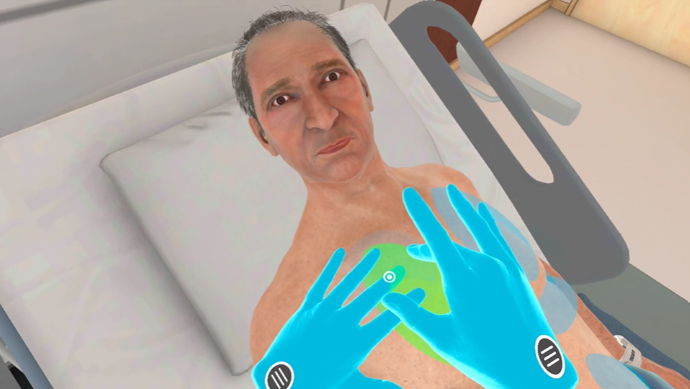
Enhanced Auscultation and Percussion Assessment
Explore UbiSim VR enhanced auscultation and new percussion assessment features built for nursing education

How Immersive VR Prepares Nurses for the Demands of Real Patient Care
Discover how immersive VR simulation builds clinical judgment and confidence in nurses using a real Med-Surg scenario as the guide.
%20(2).png)
The UbiSim Difference: Built, Designed, and Implemented by Nurses
Every step of the UbiSim experience is led by nurses. Discover what nurse-led VR simulation means for your nursing program.