How Grande Ronde Hospital Built a Nurse Residency With a 93% Retention Rate
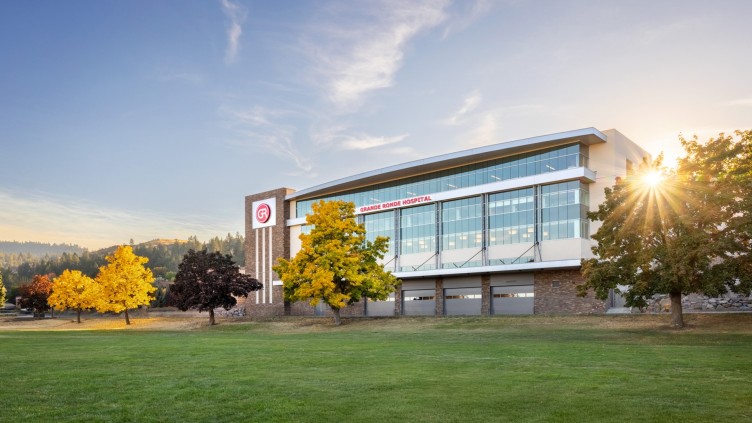
Table of Contents
Name of the heading 1
93% of nurses who have gone through Grande Ronde Hospital's Residency Program in the last five years are still working at GRH as of July 2026. The result comes from an intentional, creative approach to closing the new-graduate readiness gap, built specifically around retaining nurses.
This initiative was led by Nikkita Titus, MSN, RN, Nurse Residency Coordinator, and Bre Rollins, MSN, RN, CEN at Grande Ronde Hospital, in partnership with UbiSim.


"The editor is pretty intuitive. We've been able to take our own protocols and workflows and tailor existing simulations to what we need. Start to finish, it takes an hour to get a scenario exactly how we want it."
1- Start your table with the syntax {start-table}
2 - Add an H3 Heading to create a new column (this will be the column title)
3 - List cells as bullet points in a List element
4 - End your table with the syntax {end-table}
Key Takeaways
- Retention is designed in. The "married state" preceptor model pairs each resident with a preceptor on the same shift schedule and breaks, all year long.
- "Carpe Noctum" brings mobile simulation to night shift staff, is well received, and drives continuous learning.
- The results contributed to national recognition. Back-to-back Chartis Performance Leadership Awards for Excellence in Outcomes (2023, 2024) and a 7th-time CHIME Level 7 designation.
The Challenge: Getting New Graduates Floor Ready
Nationally, hospitals are seeing a widening gap between what nursing programs teach and what the floor requires. New graduates struggle to prioritize under pressure, recognize early deterioration, or navigate emotionally charged family conversations. Grande Ronde faced a similar gap, plus a constraint most large health systems don't: no dedicated simulation space. Its manikin-based "Sim Man" routinely gets displaced when overnight admits need the room instead, and residency education has traditionally run on daytime hours only, leaving night-shift nurses without the same access to training.
The Solution: Building Retention Into the Residency
Grande Ronde runs a structured 12-month nurse residency launching every August, with small group sizes of 5 to 12 nurses depending on hospital and unit needs. Residents get a full-time, temporary FTE and are encouraged to apply for permanent openings as they arise, without losing their preceptor or wraparound support if they do. The curriculum runs 12 hours of monthly didactic training, split into an expert-led day and a simulation-focused day, organized around a different body system or disease process each month.
Retention is built into the structure itself. The "married state" preceptor model matches each resident with a preceptor who shares their exact shift schedule and breaks, helping residents move from task-oriented thinking to holistic patient care. A cohort mentor program, launched last year, pairs new residents with nurses from previous cohorts as peer sounding boards, giving them someone with close experience to say "I'm struggling" to. Because Grande Ronde trains residents year-round, a preceptor committee and a formal Preceptor Course curriculum also keep the preceptor experience consistent and guard against burnout.
VR simulation made the tailoring possible in practice. Because headsets are portable, education isn't tied to a room that might get taken over by a real patient, or to daytime hours. That's the idea behind "Carpe Noctum": educators bring headsets onto the floor during downtime at night so night-shift nurses get the same simulation access as everyone else. Rollins described what that looks like day-to-day:
“We are able to take the headsets with us to residency classes, hold open houses in our office, schedule department-specific simulations in advance, as well as take them with us to various departments. We can go to a department with a prepared VR simulation, find an open space, and have nurses work through a scenario right then and there. It is really great to be able to provide a quick solution when someone comes to us and says, ‘I haven’t gotten to see a pre-eclamptic scenario in a while,’ or ‘I am struggling with what to say in a comfort care scenario.'”
Titus described the value of running scenarios together, not solo, in similar terms:
"It has been amazing to watch them comprehend how things should work in the hospital setting. ‘Are we following the policy correctly? Am I hanging the right antibiotic? Am I scanning my meds? Am I doing all the steps that I need to do to safe-proof my patient before I'm actually at the bedside doing these things?' It gives them the handle on inter-professional communication, and the chance to see our own facility's protocols built into UbiSim."
Scenario coverage reflects that same tailoring: sessions have covered high-risk clinical scenarios such as diabetic ketoacidosis management, postoperative pain, and obstetric preeclampsia, all built around Grande Ronde's own protocols.
That same flexibility shapes how Grande Ronde thinks about time itself. Research shared during a recent Becker's Healthcare webinar found that 76% of hiring leaders believe immersive learning could safely shorten nurse residencies by about four weeks. Grande Ronde reinvested that efficiency, keeping its 12-month residency class timeline intact, and using the time VR saves to go deeper on the support for new nurses well past their first shift. For a hospital this size, a guaranteed year of structured support is also a meaningful recruiting draw. The same VR-driven efficiency other health systems use to move faster was used here to build something sturdier.
The Results: 93% Nurse Retention and Two National Awards
Grande Ronde's VR engagement has gone beyond residents. Titus described veteran nurses showing up to open houses just to try the headset, and leadership hearing staff talk about the technology unprompted during rounds. "I feel like the hospital is committed to using this," she said. "Our staff is really doing the talking for us."
That commitment has coincided with recognition on two fronts. Grande Ronde has won the Chartis Center for Rural Health's Performance Leadership Award for Excellence in Outcomes in both 2023 and 2024, based on mortality and readmission rate comparisons, one of a handful of awards Chartis gives annually to the top quartile of rural hospitals nationwide. As GRH President and CEO Jeremy Davis put it, "Getting care right the first time is always the goal." Wade Twilegar, RN, Assistant CNO, credited the team behind the numbers: "So much of that I do believe is the work that Nikita and Bre are doing with our new grads, but also with our tenured staff." Separately, GRH has earned a Level 7 designation from CHIME in both Acute and Ambulatory care, its seventh time receiving that recognition.
And underneath it all: 93% of residents from the last five years are still at GRH.
The Takeaway: "Listen"
Asked for one piece of advice for other healthcare leaders working on the same problem, Twilegar answered with a single word: "listen." National statistics, in his view, are a useful floor, not a blueprint. The specific struggles voiced by this year's cohort, not last year's, are what should actually shape the program.
That's the thread running through everything above: every choice, from schedule-matched preceptors to 3:30 A.M. headsets, was made with one goal in mind: retaining nurses.
Watch the video below to learn more about Grande Ronde's nurse residency program.
"The catalog is probably what we use most. A lot of the scenarios are generic enough that we don't have to edit them at all. We can just say, 'here's your med-surg patient' or 'here's your post-op patient,' review it, test it ourselves, and run it as-is."

Explore more

How Wyoming Scaled VR Clinical Simulation Statewide in Under a Year
See how UbiSim and CM&D scaled VR nursing education across 8 campuses in Wyoming, delivering nearly 3,000 VR simulation sessions and 98% faculty adoption.
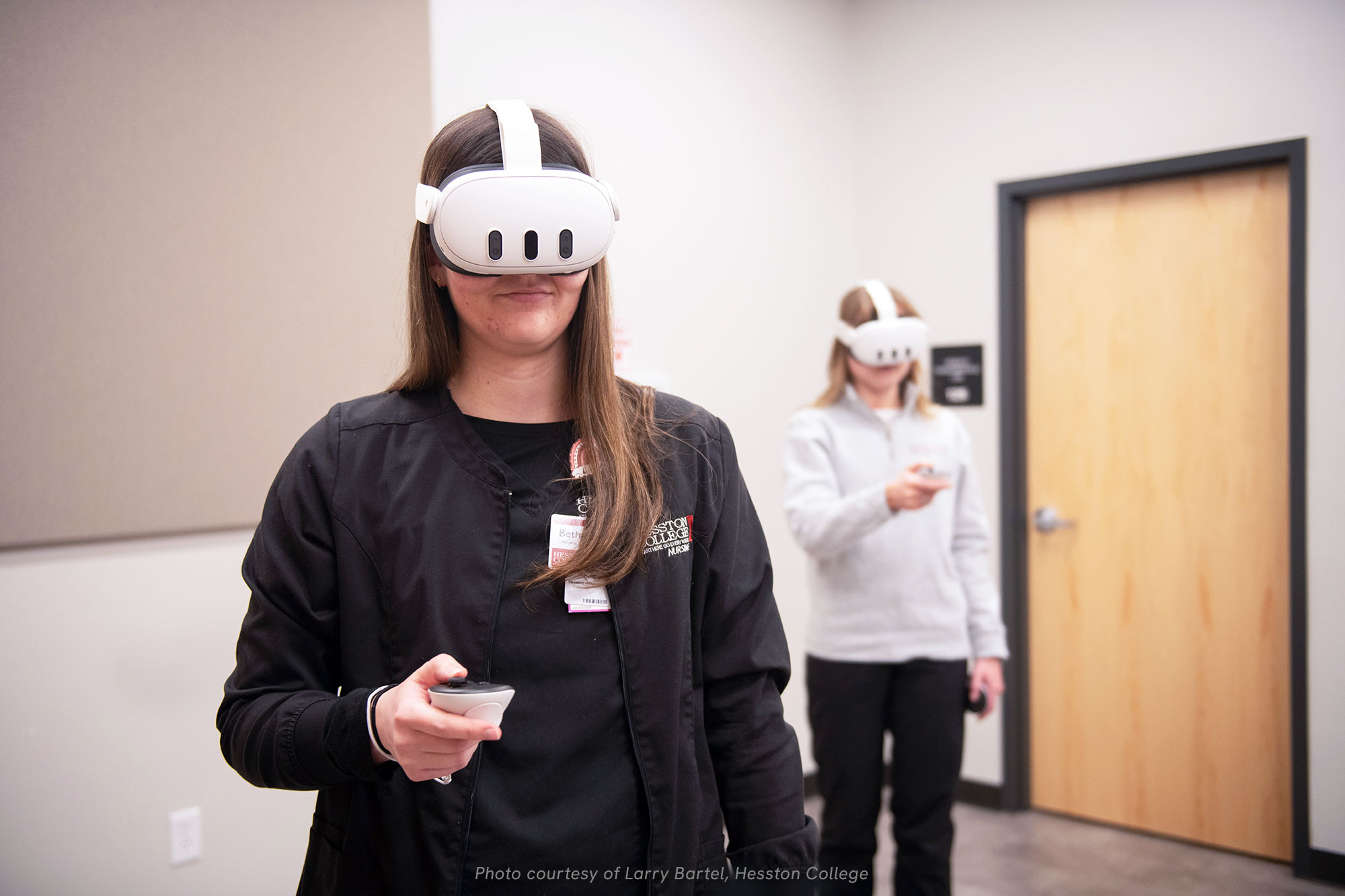
Humanizing Clinical Technology through an Artificial Wisdom Framework at Hesston College
Nurse educator Gregg Schroeder shares how high-fidelity simulation, UbiSim VR, and Artificial Wisdom framework forms confident and compassionate nurses.

The Blueprint for Scaling VR Nursing Simulation: Lessons From Maria College
Learn how Maria College used UbiSim to improve clinical readiness & student engagement across their nursing programs

