How the University of Manitoba Used UbiSim VR to Solve Clinical Placements, Program Expansion, and Rural Access

Table of Contents
Name of the heading 1
Three years ago, the University of Manitoba's College of Nursing was navigating a nursing shortage, a 50% program expansion, and a clinical placement system that couldn't keep pace.
They used UbiSim to build a successful simulation program that runs at full scale across 1,000 undergraduate students, and are now exporting their model to the University College of the North, to help rural nursing students access the same high-acuity clinical experiences their urban counterparts use regularly. A peer-reviewed study published in Quality Advancement in Nursing Education documents what they found.


“We increased our program by 50%, but as you can imagine, physical space in the hospitals has not increased by 50%. And we're not the only program in Manitoba that has expanded. Getting clinical spots is next to impossible. We are using 50% simulation to meet their clinical time, and one-third of that time is spent in immersive VR. We wouldn't be able to do this program expansion without UbiSim."
1- Start your table with the syntax {start-table}
2 - Add an H3 Heading to create a new column (this will be the column title)
3 - List cells as bullet points in a List element
4 - End your table with the syntax {end-table}
Key Takeaways
- A well-built simulation program is infrastructure. Three years of iteration made the University of Manitoba's program replicable enough to export to a rural campus without rebuilding from scratch.
- Standardized scenarios enable consistent access. Running the same UbiSim scenarios at both campuses meant every student encountered the same high-acuity clinical situations, regardless of geography.
- VR's small footprint is a feature. Two converted offices and a handful of headsets ran paired simulations for cohorts of 25, proof that the barrier to rural deployment is lower than it looks.
The Challenges: Growth Outpaced Capacity
1. Clinical Placement Shortage
The University of Manitoba's College of Nursing serves approximately 1,000 undergraduate students. Even before its program expansion, securing enough clinical placement hours was a persistent challenge, one shared by nearly every nursing program in Manitoba. Hospital capacity had not grown alongside enrollment, and competition for placement spots was intensifying. The program needed a way to fulfill clinical hours at scale without compromising the rigor that NCLEX pass rates and practice partners depended on.
2. Program Expansion
Beginning in Fall 2022, the College of Nursing raised seat capacity by 50% and compressed time to completion to 28 months, offering three terms per year. The expansion was a direct response to Manitoba's nursing workforce shortage, but it created an immediate operational problem. More students meant more placements needed in less time, including surgical rotations during summer terms when hospitals largely shut down elective procedures. Simulation, including immersive VR, became the mechanism that made the expansion possible.
3. Rural Access
With its core program stabilized, the University of Manitoba turned its attention to a structural inequity embedded in its long-standing partnership with the University College of the North. UCN students complete the same curriculum and sit the same exams as their Winnipeg counterparts, but their access to high-acuity clinical experiences is far more variable. Where a student in an urban setting might encounter a deteriorating patient or a complex obstetric case within weeks of starting a placement, a student in a rural setting might wait months. That gap in exposure creates unequal preparation for the same workforce.
Why Screen-Based Simulation Wasn't Enough
"When the pandemic hit and we had to get our students to go virtual in about a week, we did that with screen-based simulations. Although it suited our needs at the time, we saw that the point-and-click technology wasn't robust enough in that the answers were already there for the students. It gave them the ability to click on something that maybe they wouldn't have thought of themselves, whereas in an immersive environment, they have to troubleshoot and figure it out all by themselves." - Kimberly Workum, RN, BScN, MEd, CHSE, CCNE
The Solution: Closing the Gap with UbiSim
Building the Foundation (2022–2023)
When the College of Nursing launched its VR simulation program using UbiSim, the goal was straightforward: replace clinical hours at scale without sacrificing learning outcomes. The team adapted existing scenarios to reflect Manitoba-specific clinical realities using UbiSim's authoring tools, and embedded VR across every clinical course in the program.
"We really like the ability to create our own scenarios because we have a very robust simulation program with a lot of simulations that we have developed ourselves and that are very important to our program. And we were able to translate those into UbiSim," said Workum.
Within the first year, UbiSim accounted for approximately one-third of the 25% of clinical hours fulfilled through simulation, and all 1,000 undergraduate students were using it.
The results were clear enough that even when simulation temporarily replaced up to 50% of clinical hours during the program expansion, practice partners reported no deficit in the graduating cohort's clinical performance.
Expanding the Model for Rural Access (2023–Present)
Three years in, with a mature and well-documented program running in Winnipeg, the University of Manitoba extended its UbiSim program to UCN. The same scenarios, already adapted for Manitoba realities, were deployed at the rural partner institution with minimal additional infrastructure: two converted offices, three or four headsets, and faculty development conducted entirely remotely.
The extension was logistical and pedagogical. A peer-reviewed study published in Quality Advancement in Nursing Education (Harder et al., 2026) examined how UCN students experienced VR simulation through the lens of situated learning theory. Using focus groups with 12 nursing students across two remote campuses, researchers identified four themes shaping the learning experience: orientation and preparation, physical and spatial design, facilitation and support, and realism and immersion.
The study confirmed what the team had observed: students in rural settings engaged with VR differently than students in urban settings, using it as their primary opportunity to encounter high-acuity cases their clinical placements rarely offered.
Results: Program Data Meets Peer-Reviewed Validation
Proof in Practice - Three years in, here's what changed for each of the challenges above:
{start-table}
Clinical Placement → Solved at Scale
- 25% of clinical hours fulfilled through simulation, ~⅓ of that in immersive VR
- ~1,000 undergraduate students use UbiSim across every clinical course
- ~100 simulations per student across the BSN program; 20–30 in VR
Program Expansion → Sustained
- 50% program expansion completed from Fall 2022
- Students who graduated from the 50% simulation cohort showed no reported deficit in clinical performance, per practice partner feedback
- 3 years of active UbiSim use and counting
Rural Access → Extended Without Compromise
- Rural campus deployed with 3–4 headsets in two converted offices
- Class sizes of ~25 at rural campus, same scenarios, same standard as urban campus
- Faculty development at rural campus conducted entirely remotely
{end-table}
What the Research Confirmed (Harder et al., Quality Advancement in Nursing Education, Vol. 12, Issue 1)
- Orientation & Preparation - Structured orientation and pre-briefing were essential to helping students engage authentically with IVR simulations, especially given how unfamiliar the format was for most participants.
- Physical & Spatial Design - A compact footprint let the same VR setup run in a converted-office environment with no dedicated simulation center required. It also created space for peer learning, as students who shared a room could observe, listen, and learn from each other even without direct collaboration.
- Support & Guidance - Facilitators played a central role in psychological safety, helping students feel comfortable asking questions and engaging without judgment.
- Realism & Immersion - Students practiced high-stakes scenarios, including sepsis and fetal distress, in a safe environment, building confidence and clinical reasoning through repeated, low-stakes exposure.
Overall conclusion: Across all four themes, students described IVR as a safe, effective way to build confidence and readiness for future clinical placements, reinforcing UbiSim's role as a tool for authentic, situated learning.

"The biggest reason we use UbiSim is that consistent scenarios are what allow us to do this at scale. Having everybody go through the same scenario is actually a really good thing. The trajectory for the learning is pretty linear, which is sometimes exactly what you need. I want them to be able to deal with somebody with chest pain and know what to do with that."

Explore more
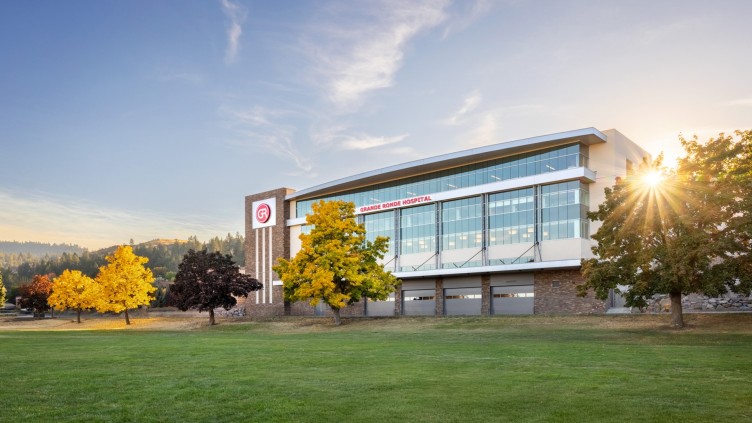
How Grande Ronde Hospital Built a Nurse Residency With a 93% Retention Rate
Grande Ronde Hospital paired VR simulation with a tailored preceptor model to reach a 93% nurse residency retention rate, and closed the new-grad readiness gap.

How Wyoming Scaled VR Clinical Simulation Statewide in Under a Year
See how UbiSim and CM&D scaled VR nursing education across 8 campuses in Wyoming, delivering nearly 3,000 VR simulation sessions and 98% faculty adoption.
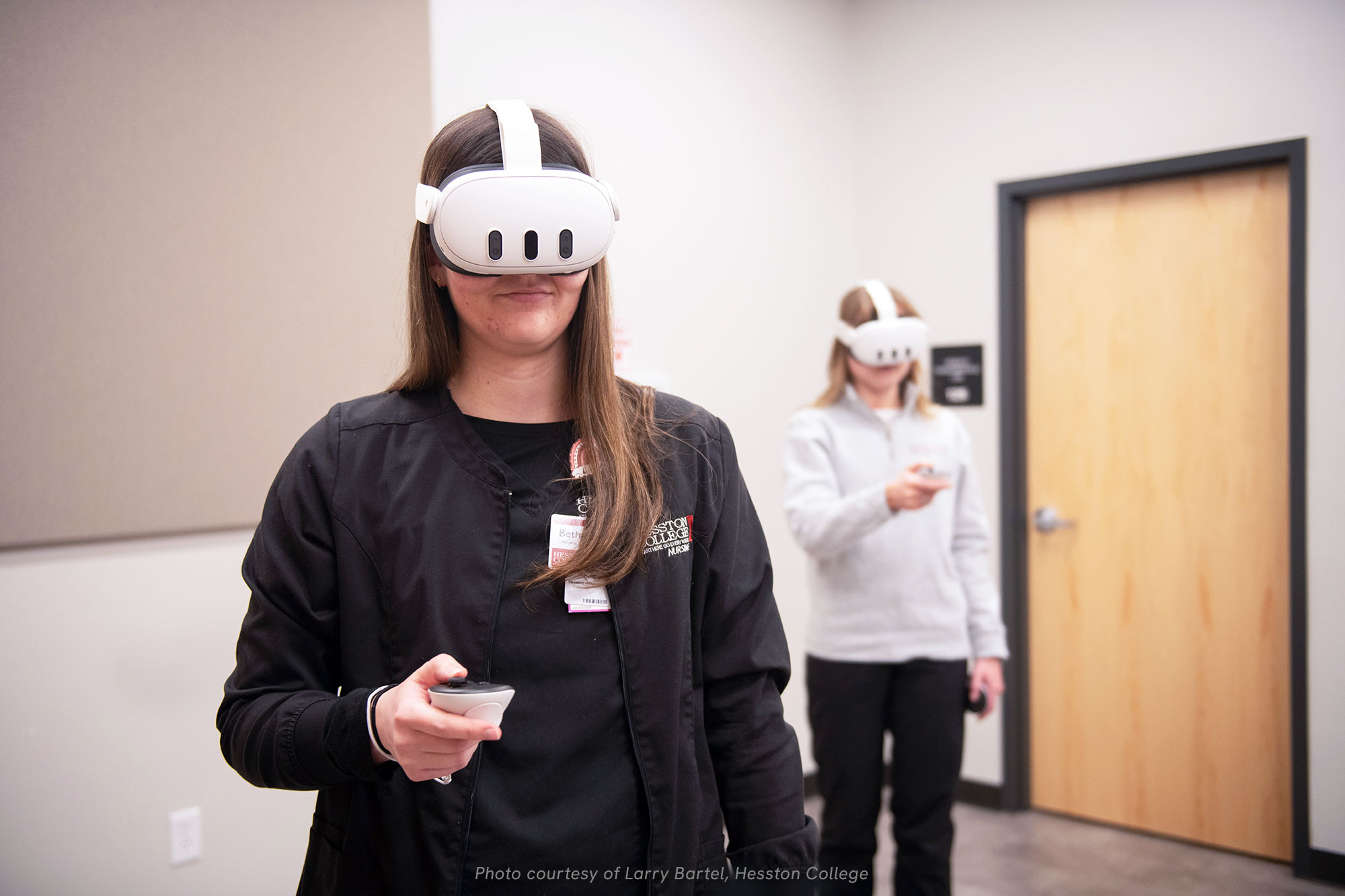
Humanizing Clinical Technology through an Artificial Wisdom Framework at Hesston College
Nurse educator Gregg Schroeder shares how high-fidelity simulation, UbiSim VR, and Artificial Wisdom framework forms confident and compassionate nurses.

