Surviving the Six-Week Wait: Encouraging Advice for Nursing Students Who Took the NCLEX Exam

Table of Contents
Name of the heading 1
1- Start your table with the syntax {start-table}
2 - Add an H3 Heading to create a new column (this will be the column title)
3 - List cells as bullet points in a List element
4 - End your table with the syntax {end-table}
Congratulations! You did it. You made it through nursing school, and you've now taken the Next Gen NCLEX exam. Be sure to acknowledge this significant accomplishment that you should be proud of. Regardless of what happens next, remember that you have already come a long way in your nursing journey.
How long does it take to get your scores back from the NCLEX exam?
The answer is six weeks. We understand that waiting six weeks for the exam results can be stressful and anxiety-inducing. However, try to remain positive and remind yourself that you've done everything possible to prepare for the exam. Use this waiting period to practice self-care and engage in activities that make you feel good.
Dealing with Exam Result Anxiety
Waiting for exam results can be stressful and anxiety-inducing, and it's okay to acknowledge these feelings. Remember, you're not alone in feeling this way. Many nursing students have experienced the same anxiety while waiting for their results.
Self-care and caring for your physical and mental health are essential during this waiting period. Engage in activities that help you relax and reduce your anxiety, such as yoga, meditation, or taking a walk. Connect with supportive friends and family members who can offer encouragement and help you manage your stress.
Exam Results Are Not What Makes You a Great Nurse
We wish you the best of luck as you await your exam results.
Regardless of your exam results, remember that you have the potential to be a compassionate and successful nurse. Don't let a single exam define your worth or future as a nurse. Continue pushing forward toward your goals and pursuing your passion for nursing.
What if I Don’t Pass the Next Gen NCLEX?
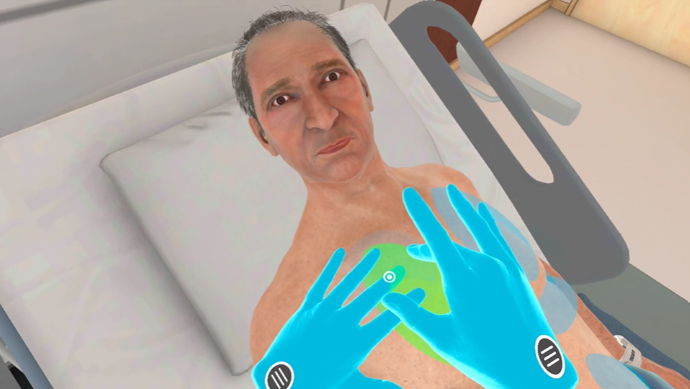
If you need to retake the exam, we recommend asking your nursing program for a VR immersive simulation tool, like UbiSim, to help you build clinical judgment skills. Have your nursing program contact us for a free demo.
FAQ:
Q: How long does it take to find out if you passed the NCLEX?
A: While some candidates seeking licensure in the U.S. can access unofficial test results two business days after taking their exam, it takes six weeks to receive official results.
Q: What is the next gen NCLEX passing score?
A: 0.18 Logits is effective through March 31, 2026.
Q: Does it take exactly 48 hours for NCLEX quick results?
A: It should, if not contact NCLEX.
Q: Can I retake the next gen NCLEX?
A: The NCSBN retake policy allows candidates to retake their exam 45 days after the administration of the exam. Some NRBs require candidates to wait longer between exams.

Give your learners hands-on clinical simulation training that builds confidence, improves decision-making, and prepares them for real-world patient care in a safe, scalable virtual environment.


As an integral center of UbiSim's content team, Ginelle pens stories on the rapidly changing landscape of VR in nursing simulation. Ginelle is committed to elevating the voices of practicing nurses, nurse educators, and program leaders who are making a difference.
Explore more
Enhanced Auscultation and Percussion Assessment
Explore UbiSim VR enhanced auscultation and new percussion assessment features built for nursing education

How Immersive VR Prepares Nurses for the Demands of Real Patient Care
Discover how immersive VR simulation builds clinical judgment and confidence in nurses using a real Med-Surg scenario as the guide.
%20(2).png)
The UbiSim Difference: Built, Designed, and Implemented by Nurses
Every step of the UbiSim experience is led by nurses. Discover what nurse-led VR simulation means for your nursing program.